


Blog
Top 10 Benefits of Using Premium k2 Herbal Incense in 2026
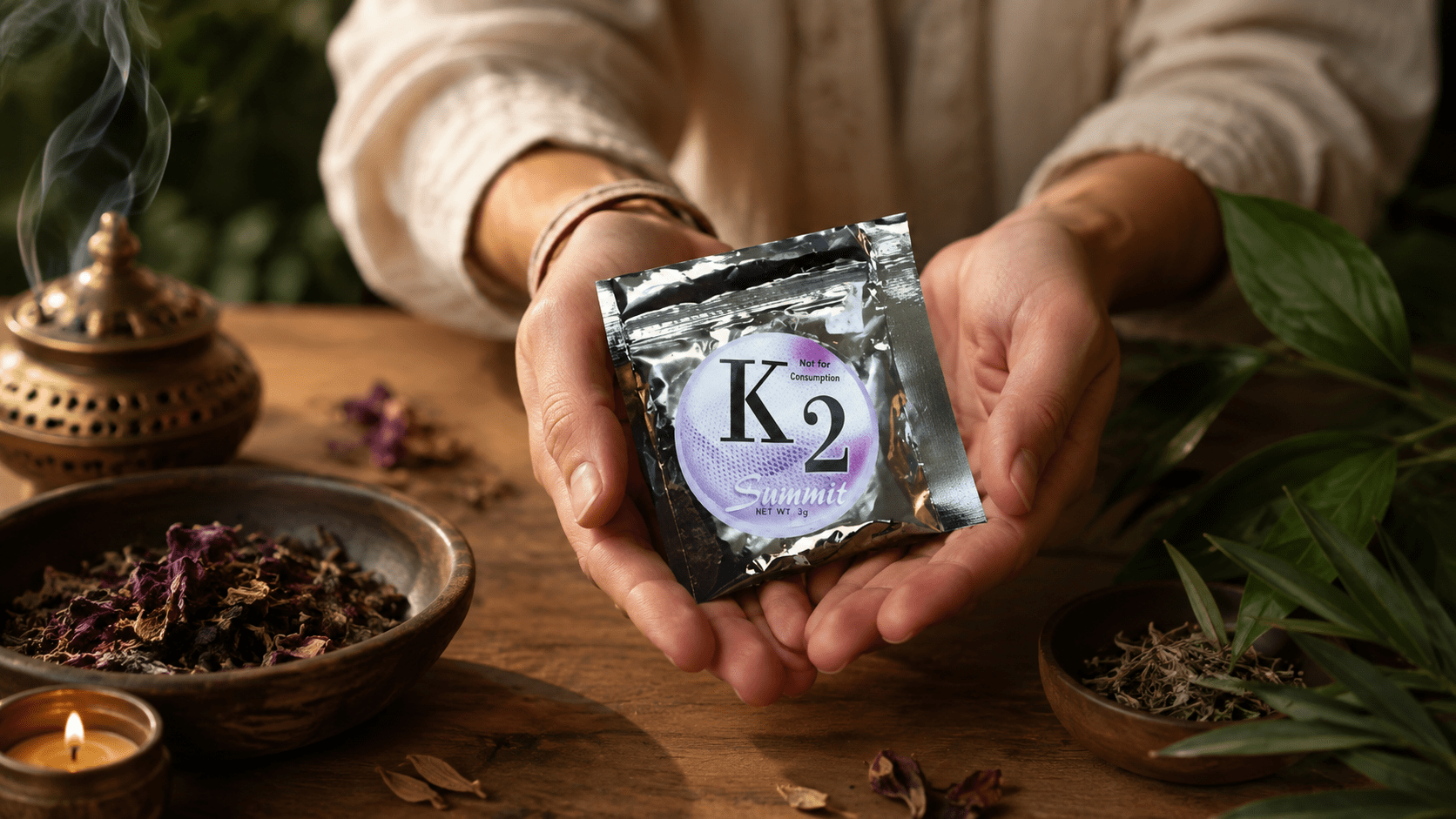
If you are searching for the top 10 benefits of using premium K2 herbal incense in 2026, you are probably looking for a calmer home, a more relaxing evening routine, or a natural way to support meditation and mindfulness.
Those goals are understandable.
However, there is an important distinction that many online articles fail to make: “K2” or “Spice” commonly refers to synthetic cannabinoids, not ordinary botanical incense. These products may be sold under labels such as “herbal incense,” “potpourri,” or “not for human consumption,” but their contents can be unpredictable and dangerous.
So here is the straightforward answer:
There are no established health benefits of using K2 or Spice. Any perceived relaxation or mood effects are not reliable wellness benefits, and they may come with serious risks.
This guide separates legitimate benefits associated with lawful, clearly labeled aromatic incense from unsupported claims about synthetic cannabinoid products. You will learn what to avoid, how to evaluate safer alternatives, and how to build a relaxation ritual without exposing yourself or others to unknown chemicals.
What Does “K2 Herbal Incense” Actually Mean?
The term “K2 herbal incense” is misleading because it can describe two very different categories of products.
1. Traditional botanical incense
Traditional incense may contain materials such as:
- Sandalwood
- Cedar
- Frankincense
- Myrrh
- Lavender
- Rose
- Sage
- Other dried plant materials, resins, or essential-oil blends
These products are generally used for fragrance, atmosphere, cultural practices, or meditation. They are not automatically risk-free, especially when burned indoors, but their purpose is usually aromatic.
2. Synthetic cannabinoid products
“K2” and “Spice” are widely used names for synthetic cannabinoid products. These are laboratory-made chemicals designed to interact with cannabinoid receptors in the brain and body.
They may be sprayed onto dried plant material or sold in liquid form. The label may claim that the product is:
- Herbal
- Natural
- Legal
- Safe
- Non-toxic
- “Not for human consumption”
Those claims should not be treated as proof of safety.
The actual ingredients may vary from one package to another. Even products with the same brand name may contain different compounds or concentrations.
The U.S. National Institute on Drug Abuse explains that synthetic cannabinoids can produce severe effects, including agitation, hallucinations, seizures, rapid heart rate, and other medical emergencies.
Pitfall Alert: “Premium,” “natural,” and “herbal” are marketing terms. They do not establish ingredient quality, purity, dosage accuracy, or safety.
The following ten claims often appear in promotional content. Each one needs careful qualification.
1. Relaxation
Some sellers claim K2 incense promotes relaxation or helps users “unwind.”
That claim is not a dependable wellness benefit. Synthetic cannabinoids can affect people unpredictably. One person may feel drowsy, while another may experience panic, paranoia, confusion, agitation, or psychosis.
A safer way to support relaxation is to use a clearly labeled, non-intoxicating aromatic product, such as an unmedicated diffuser blend, while also using evidence-informed techniques:
- Slow breathing
- Progressive muscle relaxation
- Gentle stretching
- A warm shower
- Reduced evening screen exposure
- Guided meditation
Safer interpretation: Fragrance may contribute to a relaxing environment, but K2 is not a reliable or appropriate relaxation aid.
2. Stress Relief
Stress relief is one of the most common reasons people search for K2 products. Unfortunately, synthetic cannabinoids can intensify stress rather than reduce it.
Unexpected potency, unknown ingredients, and sudden psychological effects can create a frightening experience. Some people may also develop persistent anxiety after using these substances.
For stress management, consider a repeatable routine built around environmental and behavioral cues:
- Dim harsh overhead lighting.
- Use a mild, familiar scent if you tolerate fragrance.
- Practice four to six slow breaths per minute.
- Write down the next day’s priorities.
- Keep the room cool, quiet, and ventilated.
- Follow a consistent bedtime schedule.
Key Takeaway: A calming ritual can support stress management. K2 cannot be considered a safe stress-relief product.
3. Enhanced Meditation
A pleasant scent can help mark the beginning of meditation. Lighting a traditional incense stick or using a diffuser may create a consistent sensory cue.
But intoxication is not the same as mindfulness.
Meditation generally involves greater awareness of thoughts, sensations, and breathing. Synthetic cannabinoids may instead cause disorientation, impaired judgment, anxiety, or altered perception.
If you use incense during meditation:
- Choose a product with a full ingredient list.
- Burn it only in a stable, heat-resistant holder.
- Keep it away from curtains, paper, pets, and children.
- Open a window or provide adequate ventilation.
- Never leave burning incense unattended.
- Stop if you develop headache, coughing, nausea, or breathing irritation.
Expert Corner: The most effective meditation cue is consistency. Using the same chair, time, breathing pattern, and short scent ritual can make practice easier without relying on an intoxicating substance.
4. Improved Mood
Marketing pages may describe K2 as a way to enhance mood or create euphoria. That description ignores the serious possibility of adverse reactions.
Synthetic cannabinoids can cause:
- Anxiety
- Panic
- Irritability
- Confusion
- Hallucinations
- Aggressive behavior
- Severe agitation
- Loss of consciousness
A short-lived pleasant feeling does not make a product safe or beneficial. It also does not mean future experiences will be similar.
Mood support is better approached through sustainable habits, including:
- Regular physical activity
- Social connection
- Adequate sleep
- Exposure to daylight
- Balanced meals
- Professional support when symptoms persist
If low mood, anxiety, or loss of interest continues for two weeks or more, consider speaking with a qualified healthcare professional.
5. A More Inviting Home Atmosphere
This is a legitimate benefit of aromatic incense, but it should not be attributed to K2.
A pleasant scent can change how a room feels. Depending on personal preference, incense may make a space seem:
- Warmer
- More comfortable
- More intentional
- More reflective
- Better suited to yoga or meditation
- More welcoming to guests
To create this effect safely, choose a product designed and labeled for fragrance use. Look for:
- A complete ingredient list
- Manufacturer contact information
- Clear usage directions
- Batch or lot information
- Burn-time instructions
- Sensible safety warnings
Avoid products with vague packaging, hidden ingredients, extreme claims, or instructions that encourage inhalation of smoke or vapor.
Pitfall Alert: Any product that says “not for human consumption” should not be interpreted as safe to inhale. That disclaimer often means the product has not been evaluated for human use.
6. Support for Spiritual or Cultural Rituals
Incense has a long history in religious, cultural, and spiritual practices. Its scent can help establish a sense of ceremony and transition.
That value comes from the ritual, symbolism, community, and personal meaning—not from K2.
When using incense in a spiritual practice, consider smoke-free options if anyone present has:
- Asthma
- Chronic obstructive pulmonary disease
- Fragrance sensitivity
- Migraine triggers
- Allergies
- Cardiovascular or respiratory concerns
Alternatives include:
- Electric incense heaters
- Aromatic woods used without combustion
- Fresh or dried flowers
- Unscented candles
- Bells, music, or chimes
- Breathwork
- A brief moment of silence
The goal is to support the practice without creating avoidable exposure to smoke or unknown chemicals.
7. A Consistent Evening Wind-Down Cue
A scent can become part of a bedtime routine. Over time, repeated cues may help signal that the day is ending.
However, burning any incense in a bedroom can create indoor-air concerns. Smoke contains particulate matter and combustion by-products. It may irritate the eyes, throat, and lungs, especially in poorly ventilated spaces.
A lower-exposure routine might include:
- A warm, unscented shower
- Low lighting
- Quiet music
- A paper book
- Gentle stretching
- A fragrance-free moisturizer
- A cool, dark bedroom
If you choose a scented product, use it briefly in a ventilated area and stop if it causes discomfort.
Key Takeaway: The routine is often more important than the product. You can create a powerful wind-down cue without K2 or heavy indoor smoke.
8. Sensory Enjoyment
Aromatic products can provide sensory pleasure. People may enjoy woody, resinous, floral, citrus, or earthy scents.
That is a preference, not a medical effect.
The safest way to explore fragrance is to begin with a small amount and observe your response. Avoid combining multiple new products at once. This makes it easier to identify what causes irritation or an allergic reaction.
Use additional caution around:
- Children
- Pets
- Birds
- Pregnant individuals
- People with respiratory disease
- Anyone with a history of fragrance sensitivity
Never assume that a plant-based ingredient is harmless. Essential oils and botanical extracts can still irritate skin, eyes, or airways.
9. Aesthetic Value and Home Décor
Premium-looking packaging and attractive incense holders can enhance a room’s visual design. This is a genuine, non-medical benefit of decorative fragrance products.
You can create a refined setup with:
- A ceramic incense holder
- A heat-resistant tray
- A small ventilation fan
- A lidded storage container
- Natural wood or stone décor
- A smoke-free electric warmer
- A simple display box
Choose safety and transparency over branding. A visually appealing package does not prove that its contents are safe.
If the product is sold as K2, Spice, synthetic cannabis, or an unnamed “herbal blend,” do not use it for décor if the packaging is open, damaged, leaking, or shedding plant material. Store unknown products away from children and pets and consult local hazardous-waste guidance for disposal.
10. Personal Relaxation Rituals
A personal ritual can help you transition between work, social activity, and rest. Incense may be one optional component of that ritual.
The safer formula is:
Clear ingredients + low exposure + ventilation + no intoxication claims + a repeatable routine.
A simple 10-minute ritual could look like this:
- Put your phone on silent.
- Open a window slightly if weather permits.
- Use a clearly labeled aromatic product—or skip fragrance entirely.
- Sit comfortably.
- Take ten slow breaths.
- Write one sentence about how you feel.
- Stretch your shoulders and neck.
- Drink water.
- Turn off the scent before leaving the room.
- Transition to sleep, reading, or another calm activity.
This approach supports relaxation without treating K2 as a wellness product.
No product marketed as K2 or Spice should be assumed safe for relaxation or stress relief.
Synthetic cannabinoid products may contain compounds that are:
- More potent than expected
- Unevenly distributed
- Chemically different from the label
- Contaminated
- Combined with other drugs
- Subject to abrupt formulation changes
The Centers for Disease Control and Prevention has documented outbreaks and serious illnesses associated with synthetic cannabinoid products. The U.S. Drug Enforcement Administration also warns that these substances can produce unpredictable and dangerous effects.
There is no dependable “premium” standard comparable to a regulated pharmaceutical quality system. A higher price does not guarantee:
- Accurate labeling
- Laboratory testing
- Stable potency
- Absence of contaminants
- Legal compliance
- Safe inhalation
Signs of a risky product
Do not use a product if it has any of these characteristics:
- It is labeled K2, Spice, synthetic marijuana, or synthetic cannabinoid.
- It has no complete ingredient list.
- It promises a strong psychoactive effect.
- It is sold in foil packets or colorful sachets with vague wording.
- It says “not for human consumption” while clearly being marketed for inhalation.
- It has no manufacturer address or customer-service details.
- The packaging appears altered or inconsistent.
- The seller encourages hiding the product from authorities, family, or healthcare providers.
What to Do if Someone Has a Bad Reaction
A suspected reaction to K2 or another unknown product can be a medical emergency.
Call emergency services immediately if the person has:
- Trouble breathing
- Chest pain
- A seizure
- Severe confusion
- Extreme agitation
- Unresponsiveness
- Collapse
- Blue or gray lips
- Dangerous overheating
- Repeated vomiting
- Hallucinations combined with unsafe behavior
While waiting for help:
- Keep the person away from traffic, heights, water, and fire.
- Do not leave them alone.
- Do not force food, drink, or other substances.
- Do not induce vomiting.
- Tell emergency responders what was used, if known.
- Keep the packaging available for medical personnel.
- If the person is unconscious but breathing, place them on their side if safe to do so.
In the United States, contact Poison Control at 1-800-222-1222 for guidance. If you are elsewhere, use your country’s poison information center or emergency number.
How to Choose Safer Aromatic Incense in 2026
If your goal is ambiance, meditation, or relaxation, evaluate the product rather than trusting the word “premium.”
Safer-shopping checklist
Look for:
- A clear product category, such as “incense for fragrance use”
- Full ingredient disclosure
- A named manufacturer
- Directions for burning or heating
- Fire-safety instructions
- Batch or lot information
- No claims of intoxication or euphoria
- No K2, Spice, synthetic cannabinoid, or drug slang
- Packaging that is sealed and professionally printed
Even conventional incense produces smoke. Use the minimum amount necessary and ventilate the space.
Consider smoke-free alternatives
A smoke-free alternative may be preferable if you have respiratory sensitivity or share the home with children or pets.
Options include:
- Electric wax or resin warmers
- Passive reed diffusers
- Unscented candles for visual ambiance
- Fresh flowers
- A bowl of dried citrus peel
- Fragrance-free meditation
- Nature sounds
- A HEPA air purifier paired with non-combustion fragrance
Do not add essential oils to a diffuser without checking the device instructions. Some oils may be unsafe around cats, birds, dogs, infants, or people with asthma.
A Practical Comparison: K2 Products vs. Conventional Incense
| Feature | K2 or Spice products | Clearly labeled aromatic incense |
|---|---|---|
| Primary purpose | Psychoactive effect may be intended or produced | Fragrance, ceremony, or ambiance |
| Ingredient certainty | Often poor or inconsistent | Varies; choose transparent brands |
| Reliable dosage | No | Usually not applicable |
| Risk of intoxication | Significant | Not intended, but smoke still has risks |
| Evidence of health benefits | None established | Fragrance may support a personal ritual, not treat disease |
| Indoor-air concerns | Possible smoke, vapor, or chemical exposure | Combustion smoke and particulate matter |
| Best use for wellness | Avoid | Use cautiously, or choose smoke-free options |
Evidence and Further Reading
For authoritative information, consult:
- National Institute on Drug Abuse: Synthetic Cannabinoids — background on effects and risks.
- Centers for Disease Control and Prevention: Synthetic Cannabinoids — public-health information and outbreak guidance.
- U.S. Drug Enforcement Administration: Drug Fact Sheets — information about synthetic cannabinoids and controlled substances.
Laws and product regulations vary by location and can change. Confirm current rules through your national, state, provincial, or local government website.
FAQ: K2 Herbal Incense, Relaxation, and Safer Alternatives
There are no established health benefits of using K2 or Spice. These products are commonly associated with synthetic cannabinoids and may cause unpredictable, severe, or life-threatening effects. Any perceived relaxation is not a reliable wellness benefit.
How is K2 herbal incense different from traditional incense?
Traditional incense is generally used to create fragrance or atmosphere. K2 is commonly used as a name for synthetic cannabinoid products that may be sprayed onto plant material. The two should not be treated as equivalent.
Why do people use K2 if it can be dangerous?
People may use K2 because of misleading labels, curiosity, perceived affordability, easy availability, or the belief that “herbal” means natural and safe. Some products are also marketed with claims about relaxation or euphoria. Those claims do not establish safety.
Can K2 herbal incense help with stress and anxiety?
K2 should not be used to treat stress or anxiety. Synthetic cannabinoids can worsen anxiety, trigger panic, cause paranoia, or produce confusion and hallucinations. Safer approaches include breathing exercises, physical activity, sleep support, meditation, and professional care.
When should someone seek emergency help after using K2?
Seek emergency help for breathing difficulty, chest pain, seizures, unconsciousness, severe confusion, dangerous agitation, collapse, or suspected poisoning. Keep the packaging available and tell responders what was used if you know.
The safest choice is not a K2 or synthetic cannabinoid product. For fragrance, choose a clearly labeled, non-intoxicating aromatic product from a transparent manufacturer, use minimal amounts, ventilate the room, and consider smoke-free alternatives.
Can traditional incense still irritate the lungs?
Yes. Burning incense produces smoke and particulate matter that may irritate the eyes and airways. People with asthma, allergies, migraines, or other respiratory sensitivities may prefer electric warmers, passive fragrance, or no scent.
Conclusion: Choose the Ritual, Not the Risk
The search for the top 10 benefits of using premium K2 herbal incense in 2026 often reflects a legitimate desire for relaxation, stress relief, mindfulness, and a more peaceful home.
But K2 and Spice are not dependable wellness products. Their ingredients may be unknown, their effects may vary dramatically, and their risks can include severe mental, cardiovascular, neurological, and respiratory reactions.