


Blog
How to Choose the Right K2 Product for Your Needs
Contents
- 1. How to Choose the Right K2 Product for Your Needs: The Honest Safety-First Answer
- 1.1. What Is K2, Exactly?
- 1.2. How to Choose the Right K2 Product for Your Needs: Why the Safest Choice Is Not to Choose One
- 1.3. The K2 Risk Factors Most People Miss
- 1.4. Signs a K2 Product May Be Especially Dangerous
- 1.5. What to Do Instead of Looking for a “Better” K2 Product
- 1.6. If Someone Has Already Used K2: Immediate Harm-Reduction Steps
- 1.7. How to Talk to a Friend About K2 Without Sounding Preachy
- 1.8. Reliable Sources for K2 and Synthetic Cannabinoid Information
- 1.9. Common Myths About K2 Product Selection
- 1.9.1. Myth: “The expensive package is safer.”
- 1.9.2. Myth: “If it is sold in a store, it must be legal and tested.”
- 1.9.3. Myth: “Natural herbs make it safer.”
- 1.9.4. Myth: “I can tell if it is good by smell or appearance.”
- 1.9.5. Myth: “A friend used the same brand and was fine.”
- 1.9.6. Myth: “K2 is a safer alternative to cannabis.”
- 1.10. A Practical Decision Framework: Pause Before You Buy, Use, or Recommend
- 1.11. Suggested Internal Link Opportunities
- 2. FAQ: How to Choose the Right K2 Product for Your Needs
- 2.1. What is the safest K2 product to choose?
- 2.2. How can I tell what is in a K2 or Spice product?
- 2.3. Why is K2 more unpredictable than cannabis?
- 2.4. Can a product sold at a gas station or convenience store be safe?
- 2.5. When should I call 911 after someone uses K2?
- 2.6. Can K2 cause anxiety, paranoia, or hallucinations?
- 2.7. How can I get help if I am using K2 to cope with stress or sleep problems?
How to Choose the Right K2 Product for Your Needs: The Honest Safety-First Answer
You want a clear answer before spending money, taking a risk, or trusting a package that makes big claims.
That makes sense.
But when the product in question is K2, Spice, “synthetic weed,” or synthetic cannabinoids, the most important thing to know is this: there is no reliably “right” K2 product to choose.
What Is K2, Exactly?
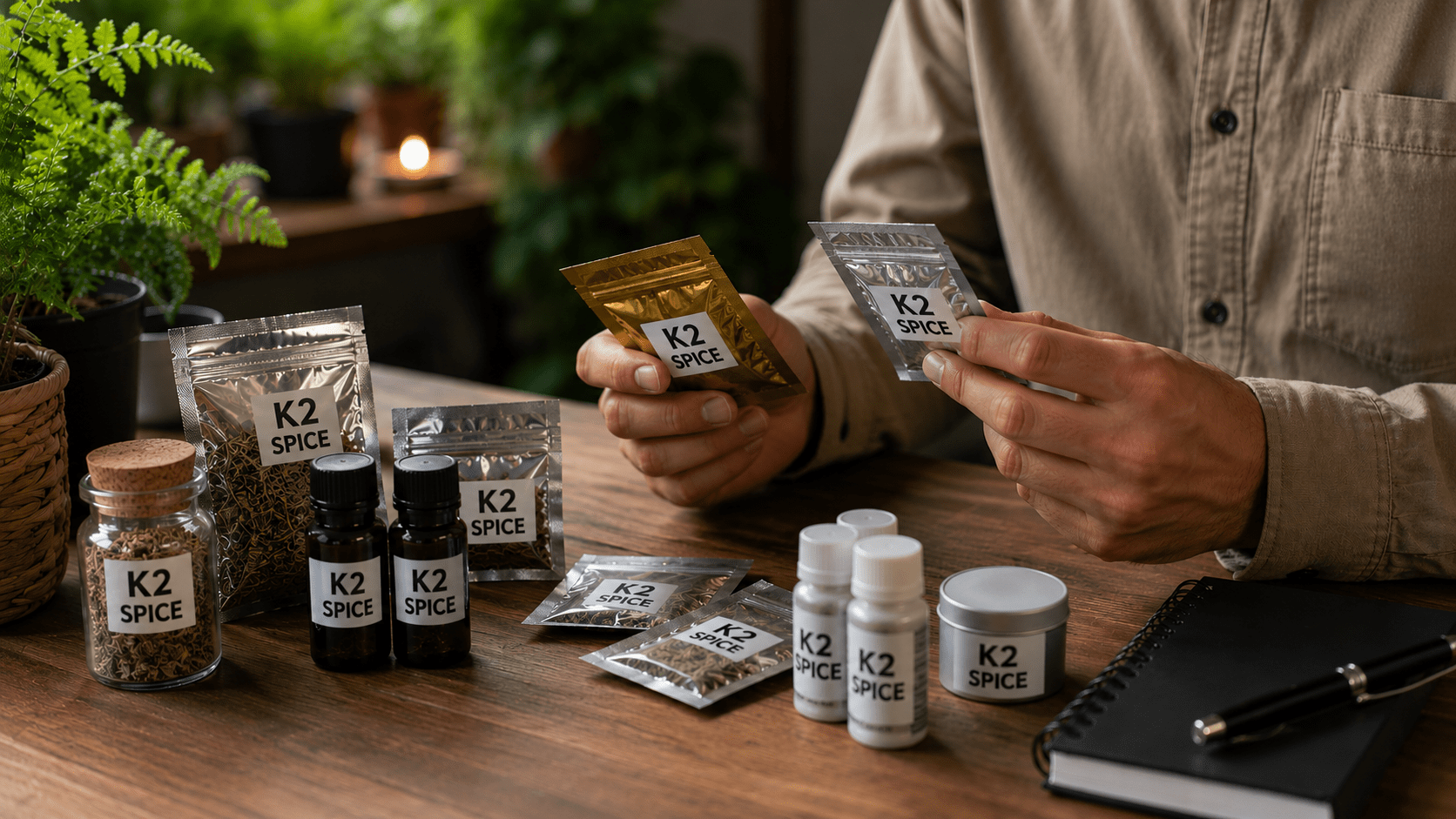
“K2” is a broad street and retail label often used for products marketed as:
- Synthetic cannabis
- Synthetic marijuana
- Spice
- Herbal incense
- Potpourri
- “Not for human consumption” blends
- Legal highs
- Herbal smoking blends
These descriptions are misleading because K2 is not one consistent substance.
Synthetic cannabinoids are human-made chemicals that can activate some of the same brain receptors affected by THC, the primary intoxicating compound in cannabis. However, many synthetic cannabinoids may bind more strongly or act differently than THC.
That difference matters.
A regulated cannabis product may list a cannabinoid profile, serving size, source, and lab-testing information. K2 products often do not provide verifiable information about:
- The actual active chemical
- The amount present
- Whether the blend is evenly distributed
- Other contaminants or additives
- Whether the ingredients match the packaging
- Whether the formula changed between batches
Two packages with the same name, color, flavor, or logo may contain completely different chemicals.
Why “Synthetic Cannabis” Is a Dangerous Description
The phrase “synthetic cannabis” can make K2 sound like a manufactured version of regular cannabis.
It is not that simple.
Many K2 compounds are chemically different from THC. They may produce stronger, longer-lasting, or more unpredictable effects. A person who has used cannabis before may assume they know what to expect from K2. That assumption can create serious risk.
The CDC has documented outbreaks involving synthetic cannabinoids where people experienced severe bleeding, agitation, altered mental status, kidney problems, seizures, and other emergencies.
How to Choose the Right K2 Product for Your Needs: Why the Safest Choice Is Not to Choose One
If you searched for a K2 product selection guide, you may be looking for answers about brands, strength, price, flavors, effects, or “safe” places to buy.
Unfortunately, those buying signals cannot verify safety.
There is no dependable consumer checklist that turns an unregulated synthetic cannabinoid product into a known, low-risk option. Packaging can be copied. Labels can be false. Ingredients can change. A seller’s claim can be inaccurate even if they believe it is true.
The Four Problems That Make K2 Product Selection Unreliable
1. The Formula May Change Without Warning
A product name is not a formula.
Manufacturers or distributors may switch chemicals to avoid legal controls, reduce costs, or alter effects. This means a person can buy what appears to be the “same” product and receive a completely different substance.
That makes brand loyalty meaningless from a safety standpoint.
2. “Potency” Claims Are Not Trustworthy
Terms such as “extra strong,” “premium,” “maximum,” “ultra,” or “legal” are marketing language—not evidence of predictable dosing or quality control.
With synthetic cannabinoids, stronger is not better. It can mean a greater risk of:
- Panic or extreme anxiety
- Confusion and paranoia
- Hallucinations
- Rapid heart rate
- Vomiting
- Aggression or severe agitation
- Seizures
- Loss of consciousness
3. The Plant Material Does Not Tell You What Is on It
Many K2 products consist of dried plant matter sprayed with synthetic chemicals.
The herbs themselves are not the main issue. The issue is what has been applied to them, how much was applied, and whether it was distributed evenly.
One section of a package may be far more concentrated than another.
4. Legal Availability Does Not Equal Safety
A product sold in a store, through social media, or online is not automatically regulated, tested, or safe.
Products are sometimes marketed with phrases such as “incense” or “not for human consumption” while being clearly designed to attract people seeking intoxication. Those labels may be intended to avoid scrutiny, not protect consumers.
The K2 Risk Factors Most People Miss
People often compare options based on price, appearance, package size, or what a friend says. Those are understandable shortcuts—but they do not answer the questions that matter most.
Here are the hidden risk factors behind many K2-related emergencies.
Unknown Active Compounds
A package may not identify the chemical compound at all. Even when an ingredient list exists, it may be incomplete, vague, outdated, or unverifiable.
Commonly reported synthetic cannabinoid compounds can vary widely in strength and effects. The average consumer cannot confirm a chemical identity simply by looking at a label.
Uneven Concentration
Chemical sprays may not cover plant material evenly.
That means an individual dose can be dramatically different from the dose someone else took—or from the dose taken earlier from the same package.
Contamination and Adulteration
Unregulated products may contain unexpected substances. Past public-health investigations have identified synthetic cannabinoid products associated with dangerous contaminants, including brodifacoum, a substance used in some rat poisons that can cause severe bleeding.
Drug Interactions
K2 can become even more unpredictable when mixed with:
- Alcohol
- Prescription medication
- Anti-anxiety medication
- Sleep medication
- Stimulants
- Opioids
- Cannabis
- Other unknown substances
Mixing substances makes it harder to predict effects and harder for medical professionals to identify the cause of an emergency.
Personal Health Factors
People with certain conditions can face greater risk, including those with:
- Heart conditions
- High blood pressure
- A history of panic attacks
- Anxiety disorders
- Depression
- Psychosis or schizophrenia
- Seizure disorders
- Kidney or liver problems
Even people without known health conditions can have serious reactions.
Signs a K2 Product May Be Especially Dangerous
No packaging feature can confirm safety. Still, certain signs should be treated as major warnings.
Red Flags to Take Seriously
Avoid trusting any product that has:
- No verifiable manufacturer information
- No batch or lot number
- No independently verifiable laboratory report
- A vague ingredient list such as “herbal blend”
- Claims that it is “undetectable” or “drug-test safe”
- Extreme potency claims
- Packaging that encourages consumption while saying “not for human consumption”
- Misspelled information, altered seals, or inconsistent labeling
- A scent or appearance that differs from a previous package with the same name
- Seller claims based only on personal opinion or anecdotes
The critical point is this: even a package without obvious red flags is not proof of safety.
What to Do Instead of Looking for a “Better” K2 Product
If your goal is relaxation, sleep, stress relief, escape, curiosity, or a cannabis-like experience, start by naming the actual need.
That makes it easier to choose a safer response.
If Your Need Is Stress Relief
Stress is real. But an unpredictable drug can create a much bigger problem than the one you started with.
Lower-risk options can include:
- A walk, workout, or pickup game
- Cold water on your face and slow breathing
- Music, gaming, or time with trusted friends
- A telehealth or campus counseling appointment
- Talking with a doctor about anxiety or sleep issues
- Support groups or substance-use counseling without judgment
If Your Need Is Better Sleep
K2 can disrupt sleep, increase anxiety, and lead to frightening reactions. If sleep is the issue, consider addressing the cause directly.
Start with practical basics:
- Keep a consistent wake-up time
- Avoid caffeine late in the day
- Put your phone away 30–60 minutes before bed
- Keep the room cool and dark
- Talk with a healthcare professional if insomnia lasts more than a few weeks
If Your Need Is Relief From Cannabis Costs or Access Problems
Price and access are common reasons people consider synthetic cannabinoids. That does not make the risks smaller.
If cannabis is illegal, expensive, or unavailable where you live, synthetic cannabinoids are still not a safe substitute. They can create medical, legal, financial, and mental-health consequences that cost far more than the short-term purchase price.
If You Are Trying to Avoid a Drug Test
Products marketed as “undetectable” are not dependable. They may still be detected through expanded testing, and the health risks are not worth the gamble.
If a test is creating pressure, focus on the underlying issue: employment requirements, legal conditions, treatment expectations, or personal use patterns. A medical provider, counselor, legal aid organization, or employee assistance program may help you find a safer path.
If Someone Has Already Used K2: Immediate Harm-Reduction Steps
The safest option is not to use synthetic cannabinoids. But if someone has already used K2, immediate safety matters more than judgment.
Do Not Leave the Person Alone if They Are Acting Unusually
Stay calm and watch for symptoms. Avoid arguing, crowding them, or escalating fear.
Move them to a safer, quieter space away from:
- Traffic
- Stairs
- Weapons
- Water
- Crowds
- Other substances
Call 911 for Serious Symptoms
Call emergency services immediately if the person has any of the following:
- Chest pain
- Trouble breathing
- Seizure activity
- Fainting or inability to wake up
- Severe confusion
- Violent agitation or dangerous behavior
- Blue or gray lips
- Uncontrolled vomiting
- Signs of severe bleeding, including coughing blood, blood in urine, black stools, or unexplained bruising
If you are in the United States, you can also contact Poison Control at 1-800-222-1222 for confidential expert guidance. If the person is unconscious, having a seizure, struggling to breathe, or showing signs of overdose, call 911 first.
What to Tell Emergency Responders
Be honest and specific. Medical professionals need accurate information to help.
If possible, tell them:
- The person’s age and symptoms
- When the product was used
- Whether alcohol or other drugs were involved
- Any known medications or health conditions
- The package name, photo, or remaining product
Do not drive a person yourself if they are severely impaired, unconscious, seizing, or having chest pain. Call for emergency help.
Key Takeaway: In a possible K2 emergency, fast medical care matters more than embarrassment, fear, or concern about getting in trouble.
How to Talk to a Friend About K2 Without Sounding Preachy
A direct, nonjudgmental conversation can make a difference—especially when someone is using because of stress, money, boredom, or peer pressure.
Try language like:
- “I’m not trying to lecture you. I’m worried because K2 can be different every time.”
- “You do not actually know what chemical is in that package.”
- “If you feel weird, panicky, sick, or your heart is racing, let’s get help.”
- “You do not have to handle this alone.”
- “Let’s find something that solves the problem without making things worse.”
Avoid insults, threats, or exaggerated claims. Stick to the facts: the chemical content is uncertain, the effects can be severe, and support is available.
When It May Be Time to Seek Professional Support
Consider reaching out for help if K2 use is:
- Becoming frequent or difficult to stop
- Causing anxiety, paranoia, mood changes, or sleep issues
- Affecting school, work, money, or relationships
- Leading to risky behavior
- Being used to cope with trauma, depression, or loneliness
- Causing withdrawal-like symptoms when stopped
In the United States, SAMHSA’s National Helpline is available at 1-800-662-HELP (4357) for confidential treatment-referral information.
Reliable Sources for K2 and Synthetic Cannabinoid Information
When researching synthetic cannabinoids, prioritize public-health and medical sources—not product blogs, influencer posts, anonymous forums, or seller claims.
Useful resources include:
- National Institute on Drug Abuse (NIDA)
NIDA explains what synthetic cannabinoids are, why they are dangerous, and how they differ from cannabis.
https://nida.nih.gov/research-topics/synthetic-cannabinoids - Centers for Disease Control and Prevention (CDC)
The CDC provides public-health information on synthetic cannabinoid outbreaks, poisoning risks, and emergency concerns.
https://www.cdc.gov/ - Poison Control
Poison Control offers immediate, confidential support for suspected exposures in the United States.
https://www.poison.org/
Phone: 1-800-222-1222 - Substance Abuse and Mental Health Services Administration (SAMHSA)
SAMHSA can help connect people with substance-use and mental-health treatment resources.
https://www.samhsa.gov/find-help/national-helpline
Common Myths About K2 Product Selection
Myth: “The expensive package is safer.”
Reality: Price is not proof of testing, quality control, or accurate labeling. A higher price may reflect branding, location, scarcity, or marketing—not safety.
Myth: “If it is sold in a store, it must be legal and tested.”
Reality: Retail availability does not prove a product is regulated or safe for use. Labels can be misleading, and laws can vary or change quickly.
Myth: “Natural herbs make it safer.”
Reality: The plant material may be marketed as natural, but the active synthetic chemicals sprayed onto it are the core risk.
Myth: “I can tell if it is good by smell or appearance.”
Reality: You cannot identify the active chemical or its concentration by smell, color, texture, or package design.
Myth: “A friend used the same brand and was fine.”
Reality: Different batches—or even different portions of the same package—may contain different amounts or chemicals. One person’s experience cannot predict another’s.
Myth: “K2 is a safer alternative to cannabis.”
Reality: Public-health agencies warn that synthetic cannabinoids can be more potent and more unpredictable than cannabis.
Pitfall Alert: “Nothing happened last time” is not evidence that the next use will be safe. With unknown formulations, past experience is a poor predictor.
A Practical Decision Framework: Pause Before You Buy, Use, or Recommend
If you are facing a real-time decision, use this simple framework.
1. Pause
Do not make a decision because you are stressed, pressured, bored, intoxicated, or trying to impress someone.
2. Name the Goal
Ask yourself: “What am I actually trying to get from this?”
Possible answers include relaxation, sleep, confidence, escape, social acceptance, or relief from anxiety.
3. Check the Real Risk
Can you verify the chemical content, the dose, the manufacturer, and independent testing?
For K2, the honest answer is usually no.
4. Choose the Lower-Risk Option
A lower-risk option may not feel as exciting in the moment. But it is more likely to protect your health, wallet, future plans, and relationships.
5. Reach Out if the Pressure Feels Bigger Than You
Talk to someone you trust. A friend, counselor, family member, coach, doctor, campus health center, or support line can help you navigate the situation without shaming you.
Suggested Internal Link Opportunities
Use these placements to strengthen topical authority and guide readers toward safer, related resources on your site:
- Anchor text: “signs of a substance-related medical emergency”
Suggested destination: Your overdose-response or emergency-symptoms guide. - Anchor text: “how to support a friend struggling with substance use”
Suggested destination: Your peer-support or intervention resource. - Anchor text: “confidential mental health and addiction support options”
Suggested destination: Your treatment, counseling, or recovery-resource hub.
FAQ: How to Choose the Right K2 Product for Your Needs
What is the safest K2 product to choose?
There is no reliably safe K2 product. Synthetic cannabinoid products may contain unknown chemicals, unpredictable concentrations, and changing formulations. Packaging, price, and brand names do not confirm safety.
How can I tell what is in a K2 or Spice product?
You usually cannot tell with confidence. Labels may be vague, inaccurate, or incomplete, and appearance, smell, or packaging cannot identify the active chemical compounds or their concentration.
Why is K2 more unpredictable than cannabis?
K2 products can contain different synthetic chemicals that may affect the brain more strongly or differently than THC. The formula and dose can change between batches, making effects difficult to predict.
Can a product sold at a gas station or convenience store be safe?
Retail availability does not prove that a K2 product is tested, regulated, legal for human use, or safe. Products sold in stores may still have unknown ingredients and misleading labels.
When should I call 911 after someone uses K2?
Call 911 immediately for chest pain, trouble breathing, seizures, unconsciousness, severe confusion, dangerous agitation, uncontrolled vomiting, or signs of bleeding. In the United States, Poison Control is also available at 1-800-222-1222.
Can K2 cause anxiety, paranoia, or hallucinations?
Yes. Synthetic cannabinoids can cause severe anxiety, panic, paranoia, confusion, hallucinations, agitation, and other mental-health symptoms. These effects may be intense and can require emergency medical care.
How can I get help if I am using K2 to cope with stress or sleep problems?
A doctor, counselor, campus health service, or substance-use treatment provider can help without judgment. In the United States, SAMHSA’s National Helpline is available at 1-800-662-HELP (4357) for confidential treatment referrals.