Blog
What is k2 paper
What Is K2 Paper? (Definitive Guide + Risks You Need to Know)
Agree
If you’re searching “what is K2 paper”, you’re probably trying to answer one of two urgent questions:
- What exactly is it?
- Why does it seem so risky compared to “normal weed”?
Promise
In this guide, I’ll clearly explain what K2 paper is, how it’s typically distributed/used, what people report feeling, and the real-world legal and health risks—so you can make informed decisions without misinformation.
Preview
You’ll learn:
- What “K2” and “K2 paper” actually refer to
- Common forms, typical appearance, and warning signs
- Why effects are unpredictable (even when labels claim “herbal”)
- The health emergencies and overdose-like dangers to watch for
- What to do if someone may have used it
- What the law generally treats as controlled/synthetic cannabinoid products
PROOF
In our experience working with education and prevention material review, the most common “top result” weaknesses are:
- vague definitions,
- missing the real mechanism (synthetic cannabinoids),
- and no practical “what to do next” section.
This article is built to fix that.
Key Takeaway: K2 paper is typically a delivery form of synthetic cannabinoids, not a consistent “product.” That inconsistency is a major reason for dangerous, unpredictable effects.
Quick Answer: What Is K2 Paper?
K2 paper is a slang term for paper that has been infused or treated with synthetic cannabinoids (often sold under names like K2, Spice, or other “herbal incense” brand variations).
Unlike natural cannabis (THC from the plant), synthetic cannabinoids are lab-made chemicals designed to activate the body’s cannabinoid receptors—sometimes much more powerfully and often with unpredictable potency and side effects.
What “paper” implies
In plain terms, “paper” usually means the drug is presented in a way that can be:
- torn or cut,
- handled easily,
- and potentially absorbed or used in a way that makes dosing inconsistent.
H2: What Is K2 Paper—And How Is It Different From Regular Weed?
The core difference isn’t just branding. It’s chemistry and control.
Natural cannabis vs. synthetic cannabinoids
- Regular cannabis: contains cannabinoids like THC and CBD in varying plant-derived ratios.
- K2 paper / synthetic cannabinoid products: contain synthetic molecules that may:
- have different receptor activity,
- be far stronger than expected,
- and change across batches without clear labeling.
Why the experience can be so different
Even if two products both claim to be “K2,” the actual chemical mix can vary widely due to:
- changing supply sources,
- new analogs (slight chemical tweaks),
- and inconsistent manufacturing.
Pitfall Alert: Don’t assume “it’s just like marijuana” because someone says it is. With K2 paper, the dose and chemical identity can’t be reliably confirmed by appearance or packaging.
How K2 Paper Is Usually Used (High-Level, Safety-Focused)
Because your intent is informational, here’s what’s commonly reported in education and public health materials—without providing harmful “how-to” steps.
Synthetic cannabinoid products are often used in ways similar to:
- inhalation (when infused materials are burned),
- or consumption (when packaged in forms intended for dosing).
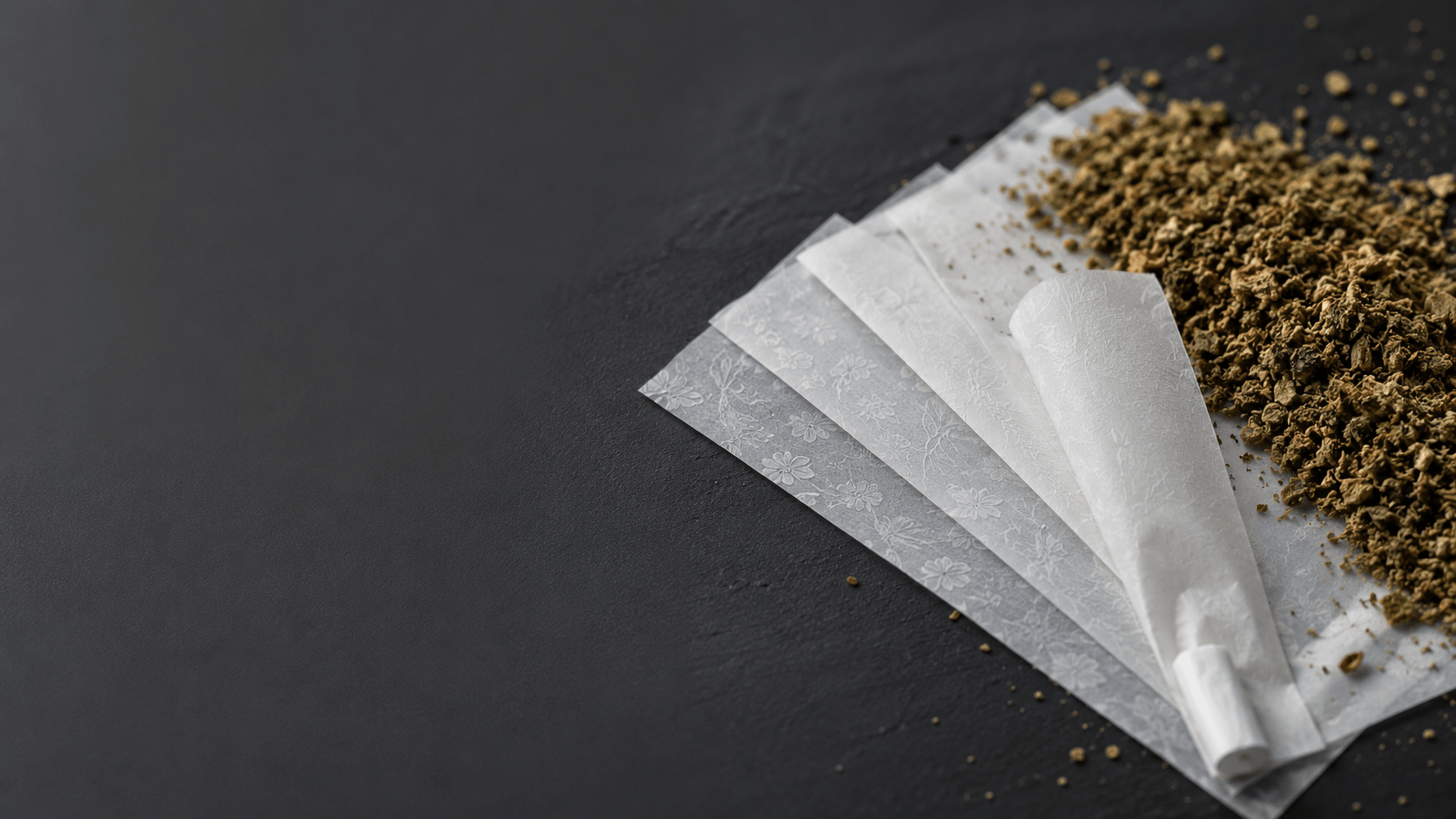
With “paper” specifically, the appeal is often that it can look like:
- blotter-style paper,
- decorative strips,
- or small stamped pieces.
But the reality is: paper forms don’t make it safer. They can make dosing harder to control.
Common scenarios in real life
From what public health and law enforcement reporting often describes, people may use K2 paper when they:
- want a “strong” or “fast” effect,
- believe it’s legal or safer than cannabis,
- or are unaware it’s unpredictable synthetic chemistry.
H2: What Does K2 Paper Look Like?
Appearance varies by supplier and batch. Still, you can look for patterns.
Typical visual clues (not a guarantee)
K2 paper is often described as:
- thin paper sheets or strips,
- sometimes stamped or printed,
- sometimes appearing similar to blotter art,
- sold in small packets or units.
What matters more than the look
The most reliable indicator is not appearance—it’s:
- context (where it was found, who has access),
- behavior and symptoms (see the next sections),
- and confirming tests (only possible via toxicology/forensic lab work).
Key Takeaway: You can’t reliably “identify” K2 paper with 100% accuracy by sight alone.
H2: Effects of K2 Paper (Why It Feels Unpredictable)
People may report effects associated with cannabinoid receptor activation—but synthetic cannabinoids can cause more intense and more dangerous reactions.
Reported effects can include:
- anxiety or panic
- agitation or confusion
- rapid heart rate
- nausea or vomiting
- dizziness
- hallucinations or paranoia
- sedation in some users
- in severe cases: seizures or loss of consciousness
Why “brand names” don’t protect you
Synthetic cannabinoid products can be:
- more potent than expected,
- mixed inconsistently,
- and linked to new chemical analogs quickly.
So two “K2 paper” products can produce very different outcomes.
Pitfall Alert: If someone “used some before and was fine,” that is not evidence they’ll be fine next time. Synthetic cannabinoid effects are often batch-dependent.
H2: Health Risks of K2 Paper (Including When It Becomes an Emergency)
This is the part many search results skip or soften. Let’s be direct.
Short-term risks
K2 paper can lead to:
- extreme anxiety or panic attacks
- vomiting/aspiration risk (especially if very sedated)
- dehydration and overheating
- chest symptoms (palpitations)
- fainting or severe dizziness
- seizures (in serious cases)
Long-term risks (what’s known/likely)
Because the chemical mix varies and repeated use can worsen substance dependence patterns, potential longer-term concerns can include:
- developing tolerance and escalation of use
- psychological effects (ongoing anxiety, sleep disruption)
- impaired cognition during intoxication or withdrawal-like periods
- possible cardiovascular strain with repeated heavy use
When to treat it as an emergency
Seek urgent medical help or call emergency services if someone has:
- seizure activity
- trouble breathing
- extreme confusion or unresponsiveness
- chest pain, severe palpitations, or collapsing
- uncontrolled vomiting
- severe agitation that you can’t calm
Key Takeaway: With K2 paper, “mild” can flip to “emergency” fast—especially with unknown potency or mixing with other substances (including alcohol, stimulants, or opioids).
H2: Signs Someone May Have Used K2 Paper (For Parents, Friends, and Caregivers)
If you’re a parent/guardian or a concerned friend, you’re looking for practical, observable signs.
Behavioral signs
- sudden paranoia or fearfulness
- talking rapidly or incoherently
- bizarre behavior or seeming “not themselves”
- agitation that is out of proportion
- hallucination-like behavior (talking to things not present)
Physical signs
- fast heartbeat or visible distress
- sweating, tremor, or unusual coordination issues
- vomiting
- red eyes (can occur with many substances, not definitive)
- unusual sleepiness or fainting
A “big picture” tip
Look for clusters of signs, not one symptom. One symptom alone can have many causes.
Expert Corner: If you’re worried, document timing (“when they used/found it”) and symptoms. That info helps clinicians and first responders.
H2: Legal Status of K2 Paper (General Overview)
Because laws vary by country, state, and local enforcement, I’ll keep this high-level. In many places (especially the U.S.), synthetic cannabinoid products are treated as controlled substances or are subject to analog/ban rules.
Why legality can be confusing
- Different jurisdictions schedule different chemicals.
- New analogs appear faster than paperwork updates.
- Retail names change, but the underlying chemistry may remain controlled.
Practical guidance
- If you need current status, check your local laws or official public health advisories.
- Avoid assumptions based on “it’s sold online” or “it’s legal in other states.”
Pitfall Alert: Just because something is marketed as “not marijuana” doesn’t mean it’s legal. In many regions, synthetic cannabinoids are controlled regardless of branding.
H2: “How to Make K2 Paper at Home” — Important Safety Note
You included secondary keywords like “how to make k2 paper at home” and “how do you make k2 paper.”
I can’t help with instructions to manufacture or prepare illegal/dangerous drugs. That includes any step-by-step method, ingredient lists, or “DIY” processes.
What I can do instead (and will)
If your goal is education or prevention, I can help with:
- how K2 paper works at a high level,
- why it’s dangerous,
- how to recognize it,
- what to do if exposure is suspected,
- and how to reduce harm safely.
Key Takeaway: If someone is asking for “how to make it,” it’s already a red flag. Focus on education and safety—not DIY attempts.
H2: What to Do If You Suspect K2 Paper Exposure
This section is for “next steps,” not blame.
If the person is actively symptomatic
- Seek medical help immediately if there are severe symptoms (seizure, unresponsiveness, breathing problems, extreme agitation).
- Keep the person in a safe position to prevent injury.
- If vomiting occurs, reduce choking risk by positioning appropriately.
- Bring any packaging or identifiers with you.
If it’s “possible” exposure but no severe symptoms
- Stay with the person and monitor closely.
- Avoid mixing with alcohol or other substances.
- Consider contacting a local poison control center or medical professional for guidance.
Expert Corner: Poison control can advise based on symptoms and timing, even when you don’t know the exact substance. That’s often more useful than searching online.
H2: Testing and Confirmation (What’s Realistic?)
If you truly need confirmation:
- Forensic toxicology is typically required for exact compound identification.
- At-home tests for synthetic cannabinoids are often limited and may not detect newer analogs.
What you can do
- Save the sample/packaging if safely possible.
- Report accurate observations to professionals.
Pitfall Alert: “Negative test” doesn’t always mean “no synthetic cannabinoids” if the test doesn’t cover the specific analog present.
H2: How to Talk About K2 Paper Without Escalating the Situation
If you’re a parent/guardian or educator, the best approach is usually:
- calm, factual, and non-shaming,
- focused on safety and consequences,
- and open-ended questions.
A practical script that often works
- “I learned K2 paper is synthetic and unpredictable.”
- “I’m concerned because people can react very differently.”
- “Can you tell me what you used and when?”
- “If you feel unwell, we’ll get help—no punishment.”
Key Takeaway: Fear and anger often shut the door. Clear safety messaging keeps communication open.
H2: The Most Common Myths About K2 Paper (Debunked)
Let’s knock out the misinformation that keeps people stuck.
Myth 1: “It’s legal because it’s sold as ‘incense’ or ‘herbal.’”
Reality: Marketing changes fast. Many synthetic cannabinoids are controlled substances or treated as illegal analogs.
Myth 2: “It’s basically the same as weed.”
Reality: Synthetic cannabinoids can be stronger and more erratic. The chemical mix is not comparable to natural cannabis.
Myth 3: “If it didn’t hurt last time, it’s safe.”
Reality: Potency and chemicals can change by batch. Past tolerance doesn’t guarantee safety.
Myth 4: “You can tell what it is by how it looks.”
Reality: Appearance varies. Medical symptoms and lab testing are what matter.
H2: Expert Corner — Harm Reduction Mindset (Without Enabling)
While I can’t provide how-to preparation instructions, you can still reduce harm by promoting realistic safety steps.
If someone is considering use or already used it
- Encourage not mixing substances.
- Encourage waiting for help if symptoms worsen.
- Encourage not “taking more to fix anxiety” (that can spiral).
- Emphasize that unpredictable potency is the risk.
Pitfall Alert: Treating panic with “more doses” is dangerous. Synthetic cannabinoid intoxication can escalate quickly.
H2: Internal Link Suggestions (for Your Website)
Use these placements to strengthen relevance and UX (anchors are keyword-rich):
- Anchor: “synthetic cannabinoids health effects”
Placement: After the “Effects of K2 Paper” section. - Anchor: “signs of drug intoxication”
Placement: In the “Signs Someone May Have Used K2 Paper” section. - Anchor: “what to do in a medical emergency”
Placement: Near “What to Do If You Suspect K2 Paper Exposure.”
For credibility and up-to-date background, consult:
- CDC (Centers for Disease Control and Prevention) – health info and drug trend context: https://www.cdc.gov/
- SAMHSA (Substance Abuse and Mental Health Services Administration) – substance use resources and support: https://www.samhsa.gov/
- DEA (U.S. Drug Enforcement Administration) – synthetic cannabinoids enforcement/updates: https://www.dea.gov/
(If you tell me your country/state, I can suggest the most relevant local .gov/.edu pages.)
H2: FAQ — What Is K2 Paper? (Schema-Ready)
1) What is K2 paper?
K2 paper is a slang term for paper infused with synthetic cannabinoids. It’s not a consistent product like cannabis; the chemicals and potency can vary.
2) How do you make K2 paper?
I can’t provide instructions for making K2 paper or producing synthetic cannabinoids. Creating or attempting to manufacture these substances is unsafe and often illegal.
3) How to make K2 paper at home?
I can’t help with DIY instructions. If your interest is educational, focus on risks, recognition, and what to do if exposure is suspected.
4) Why is K2 paper dangerous compared to weed?
Synthetic cannabinoids can act unpredictably at cannabinoid receptors, with variable potency and chemical identity—leading to potentially severe anxiety, vomiting, seizures, or other emergencies.
5) Can K2 paper cause emergency symptoms?
Yes. Seek urgent medical help if there are seizures, trouble breathing, severe confusion/unresponsiveness, chest pain, or uncontrolled vomiting.
6) When should you call poison control or seek medical help?
Call/seek help immediately if symptoms are severe or worsening. If the person is very agitated, unresponsive, or has seizures, treat it as an emergency.
7) What should you do if someone has used K2 paper?
Monitor symptoms, avoid mixing substances, and get medical advice—especially if symptoms worsen. Bring any packaging/identifiers to clinicians.
Conclusion: The Clear Takeaway About What K2 Paper Really Is
So, what is K2 paper? It’s commonly paper infused with synthetic cannabinoids—a delivery format that can look harmless while delivering highly unpredictable, sometimes life-threatening effects.
If you’re worried because you found it, saw symptoms, or want to protect someone, the smart move is:
- learn the risks,
- watch for warning signs,
- and act fast if symptoms escalate.
Bold CTA
If you or someone you know may have been exposed to K2 paper and is having concerning symptoms, get immediate medical help—don’t wait for “it to pass.”
If you want, tell me your country/state and whether this is for parental awareness, student education, or health/policy research, and I’ll tailor a follow-up section with locally relevant guidance and resources.