


Blog
How K2 Mimics Cannabis Without Being Cannabis
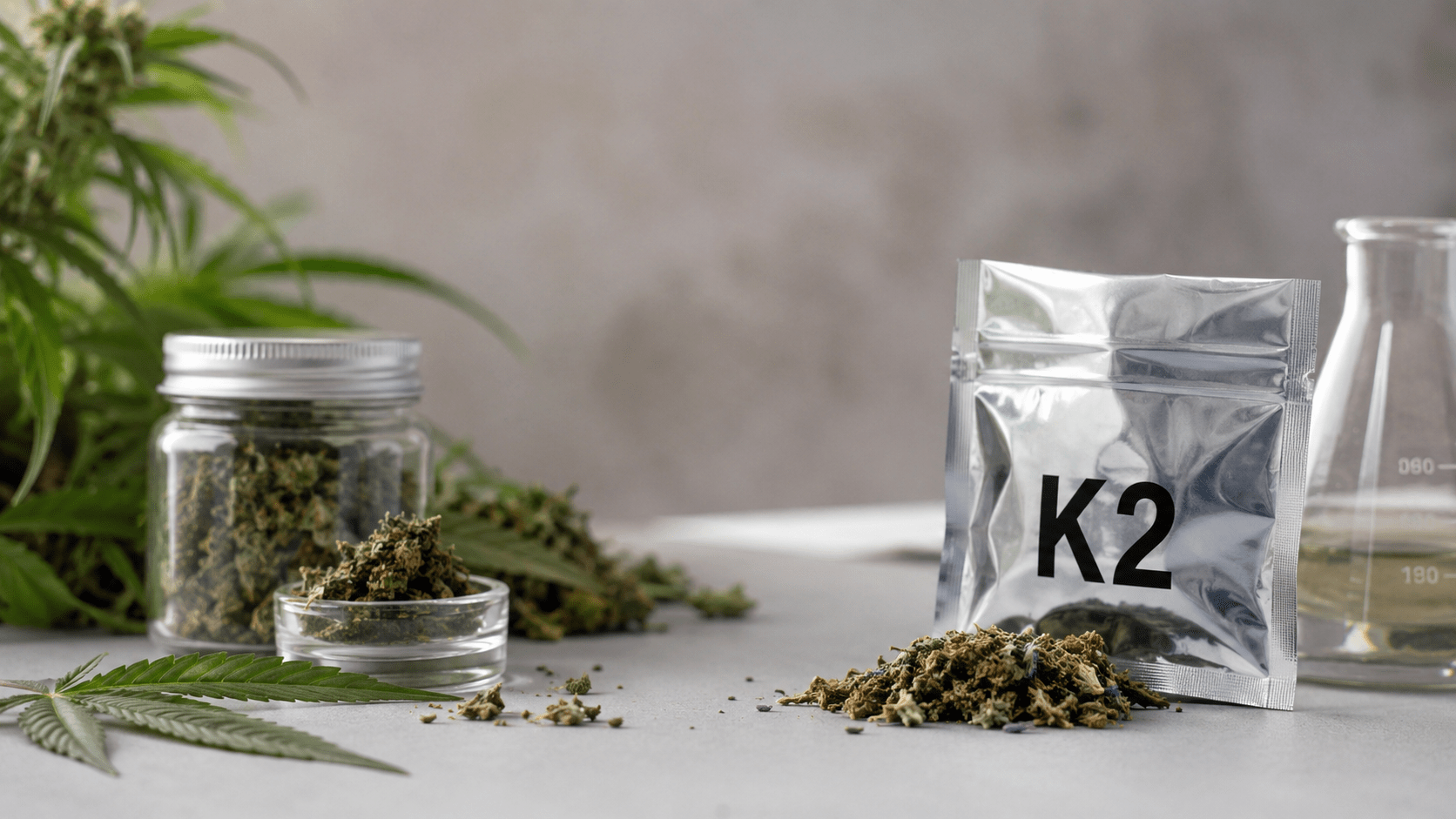
The Biological Illusion: How K2 Mimics Cannabis Without Being Cannabis
You’ve heard the warnings about K2.
You know it’s often called “synthetic marijuana.”
But you’re still wondering how a lab-created chemical can possibly replicate the effects of a natural plant.
It sounds like scientific magic, but it’s actually a dangerous biological trick.
By the end of this guide, you will understand the exact mechanism behind this mimicry.
More importantly, you’ll learn why this chemical illusion makes synthetic products vastly more dangerous than natural weed.
The Core Science: How K2 Mimics Cannabis Without Being Cannabis
To understand the trick, you first need to understand the target.
Your brain and body contain a complex network called the Endocannabinoid System (ECS).
The ECS regulates mood, memory, pain, and appetite.
It relies on specific receptors—primarily CB1 in the brain and CB2 in the immune system.
Think of these receptors as biological locks.
Natural cannabis contains THC, which acts as a key that fits perfectly into these locks.
When THC turns the lock, you feel the classic “high.”
Here is the bottom line: K2 mimics cannabis by using synthetic keys that fit into the exact same locks.
However, the way these synthetic keys turn the locks is where the danger begins.
The Lock and Key Mechanism Explained
Scientists refer to how drugs interact with receptors as “agonism.”
An agonist is a substance that binds to a receptor and activates it.
Natural THC is a partial agonist.
This means it binds to the CB1 receptor and activates it, but only up to a certain point.
It’s like a dimmer switch on a light. You can turn it up, but it has a maximum limit.
Synthetic cannabinoids found in K2 are full agonists.
They bind to the same CB1 receptors but activate them with 100% intensity.
There is no maximum limit. It’s like flipping a light switch to maximum brightness and welding it in the “on” position.
Synthetic Cannabinoids vs Cannabis: The Missing Shield
If K2 just turns the receptors up higher, why is it so much more dangerous?
The answer lies in what natural cannabis has that K2 completely lacks.
Natural cannabis is a complex botanical masterpiece.
It contains over 100 different cannabinoids, plus hundreds of terpenes and flavonoids.
The most important secondary cannabinoid is CBD (cannabidiol).
CBD acts as a biological buffer.
When you consume natural cannabis, CBD actually modulates how THC interacts with the CB1 receptor.
It reduces anxiety, prevents paranoia, and stops the heart rate from spiking out of control.
This balancing act is known as the Entourage Effect.
K2 Has No Brakes
Synthetic cannabinoids are isolated, single-molecule chemicals.
There is no CBD in K2.
There are no terpenes.
There is no entourage effect.
When you consume K2, you are getting 100% full-receptor agonism with zero biological buffering.
It is all gas and absolutely no brakes.
This lack of a “missing shield” is the primary reason why the differences between K2 and natural cannabis are so stark when it comes to side effects.
The Chemical Wild West: How K2 is Actually Made
Another massive difference between K2 and natural cannabis is how they are produced.
Natural cannabis is grown, harvested, and cured.
The chemical profile of a cannabis plant is relatively stable.
K2, on the other hand, is manufactured in unregulated, clandestine labs.
Here is the grim reality of how synthetic marijuana mimics cannabis effects in the physical world.
The “Plant” Illusion
K2 is not actually a plant.
The base material is usually cheap, inert botanical matter.
Think of dried oregano, marshmallow leaf, or plain shredded paper.
Lab technicians dissolve synthetic cannabinoid powders in volatile, often toxic industrial solvents.
They then spray this chemical cocktail directly onto the inert plant material.
Finally, they package it in flashy, colorful foil packets with names like “Spice,” “K2,” or “Potpourri.”
The “Hot Spot” Danger
Because this process is done by hand in unregulated environments, the spraying is incredibly uneven.
This creates what harm-reduction experts call “hot spots.”
One puff from a K2 joint might contain a mild dose of chemicals.
The very next puff might pull from a “hot spot” containing a massive, concentrated dose.
This uneven distribution makes dosing completely impossible.
You never truly know how much of the active chemical you are consuming.
Differences Between K2 and Natural Cannabis: A Direct Comparison
To truly understand the landscape, we need to look at the direct differences between K2 and natural cannabis side-by-side.
This comparison will highlight why the mimicry is so deceptive.
1. Chemical Predictability
- Natural Cannabis: Highly predictable. Strains are tested for THC and CBD percentages. You know exactly what you are getting.
- K2: Highly unpredictable. The chemical compounds change constantly to evade the law. You never know what solvent or chemical variant is in your batch.
2. Onset and Duration
- Natural Cannabis: Effects peak within 30 minutes to an hour (when smoked) and taper off smoothly over a few hours.
- K2: Effects can hit almost instantly and last much longer. The prolonged receptor binding can lead to extended periods of psychosis or physical distress.
3. Physical Side Effects
- Natural Cannabis: Mild physical effects. Slightly elevated heart rate, dry mouth, red eyes, increased appetite.
- K2: Severe physical effects. Extreme tachycardia (racing heart), vomiting, seizures, kidney damage, and in severe cases, cardiac arrest.
4. Psychological Side Effects
- Natural Cannabis: Euphoria, relaxation, altered perception, mild anxiety (rarely severe panic).
- K2: Extreme agitation, violent behavior, severe paranoia, hallucinations, and acute psychosis requiring hospitalization.
[Internal Link: For a deeper dive into how the body processes these compounds, read our comprehensive guide on Understanding the Endocannabinoid System.]
The Legal Cat-and-Mouse Game
You might be wondering: If K2 is so dangerous, why is it still sitting on the shelves of gas stations and head shops?
The answer lies in a brilliant, yet deadly, legal loophole.
When governments first realized what K2 was, they rushed to ban the specific chemicals used to make it.
Lab chemists simply tweaked the molecular structure by adding or removing a single atom.
This created a brand-new chemical that wasn’t explicitly on the banned list.
This game of chemical whack-a-mole has been going on for over a decade.
The “Not For Human Consumption” Loophole
To avoid prosecution, K2 manufacturers label their products deceptively.
They sell it as “incense,” “potpourri,” or “botanical specimens.”
The packaging always includes a stark warning: “Not for human consumption.”
This is a legal shield.
By explicitly telling you not to smoke it, they attempt to absolve themselves of liability if you choose to ignore the warning and get high.
It is a cynical marketing tactic designed to keep these dangerous products on the market.
Recognizing the Red Flags: When the Mimicry Goes Wrong
Because synthetic marijuana mimics cannabis effects, many users approach it with the same casual mindset they use for natural weed.
This is a fatal miscalculation.
You need to know how to recognize when the mimicry has crossed the line into toxicity.
If you or someone you know has consumed K2, watch for these critical red flags.
Physical Red Flags
- Extreme Tachycardia: A heart rate that feels like it’s pounding out of the chest, often exceeding 130-150 BPM.
- Uncontrollable Tremors: Shaking, muscle spasms, or full-body seizures.
- Pale, Clammy Skin: A sign of severe cardiovascular distress or dropping blood pressure.
- Unresponsiveness: Fainting or inability to be woken up.
Psychological Red Flags
- Extreme Agitation: Pacing, yelling, or sudden, uncharacteristic violent behavior.
- Delirium and Hallucinations: Seeing or hearing things that aren’t there, often of a terrifying nature.
- Catatonia: Staring blankly, completely unresponsive to external stimuli, and mute.
What to Do in an Emergency
If you spot these red flags, do not wait to see if it “passes.”
- Call 911 immediately. Tell the dispatcher the person has consumed a synthetic cannabinoid.
- Keep them safe. Move them away from stairs, sharp objects, or traffic.
- Do not restrain them unless they are an immediate danger to themselves or others. Restraining a highly agitated K2 user can trigger sudden cardiac arrest.
- Stay with them. Keep talking to them in a calm, low voice until help arrives.
[Internal Link: Equip yourself with more life-saving knowledge by reading our Harm Reduction Guide for Synthetic Substances.]
The Long-Term Toll: Addiction and Withdrawal
Another critical difference between K2 and natural cannabis is the addiction potential.
While cannabis use disorder is real, the withdrawal symptoms are generally mild (irritability, sleep issues).
Synthetic cannabinoids, however, can cause severe physical dependence.
Because they overwhelm the brain’s reward system with such intense, unbuffered receptor activation, the brain quickly down-regulates its own natural endocannabinoid production.
When a heavy K2 user stops, the crash is brutal.
Symptoms of K2 Withdrawal
- Severe anxiety and panic attacks
- Profound depression and suicidal ideation
- Insomnia and vivid, terrifying nightmares
- Intense cravings for the synthetic chemical
- Physical symptoms like sweating, headaches, and tremors
This severe withdrawal profile is why many users find themselves trapped in a cycle of compulsive use, despite the terrifying side effects.
The brain becomes chemically hijacked by the full-agonist properties of the synthetic molecules.
Why People Still Choose the Mimicry
If K2 is so dangerous, unpredictable, and legally dubious, why does it still have a user base?
Understanding the “why” is crucial for harm reduction and education.
There are three primary drivers for K2 use.
1. The Drug Test Evasion Myth
Historically, K2 was marketed as a way to pass drug tests.
Because synthetic cannabinoids have a different molecular structure than THC, they did not show up on standard 5-panel or 10-panel urine tests.
Note: Today, specialized tests can detect many common synthetic cannabinoids, making this a risky and largely outdated strategy.
2. Accessibility and Cost
In many areas, natural cannabis is still heavily taxed, restricted, or entirely illegal.
K2 is incredibly cheap.
A small foil packet can cost just a few dollars, making it accessible to vulnerable populations, including the homeless and those in extreme poverty.
3. The Pursuit of Extreme Intensity
Some users deliberately seek out K2 because they have built a massive tolerance to natural cannabis.
They are chasing a stronger, more intense high that natural weed can no longer provide.
Unfortunately, they are chasing a chemical sledgehammer, not a stronger dimmer switch.
[Internal Link: Understand the broader implications of drug testing and substance use by checking out our article on Navigating Cannabis Drug Tests in 2024.]
The Bottom Line on the Biological Illusion
The question of how K2 mimics cannabis without being cannabis comes down to a dangerous biological hack.
It uses synthetic keys to unlock the same brain receptors as natural THC.
But by acting as a full agonist, and by lacking the protective buffering of CBD and the entourage effect, it turns a manageable experience into a physiological roulette wheel.
Add in the unregulated manufacturing, the toxic solvents, and the uneven “hot spots,” and you have a recipe for disaster.
Frequently Asked Questions (FAQ)
What is the main chemical difference between K2 and cannabis?
The main difference is that natural cannabis contains THC, a partial agonist that binds moderately to brain receptors. K2 contains synthetic cannabinoids, which are full agonists that bind to the same receptors but activate them with maximum, unregulated intensity. Furthermore, K2 lacks the hundreds of other natural compounds found in the cannabis plant.
How do synthetic cannabinoids mimic cannabis effects in the brain?
Synthetic cannabinoids mimic cannabis by chemically binding to the exact same CB1 and CB2 receptors in the body’s endocannabinoid system. By turning these receptors “on,” they produce psychoactive effects similar to THC, such as altered perception and euphoria, but often at a much more extreme and dangerous level.
Why is K2 more dangerous than natural marijuana?
K2 is more dangerous because it lacks CBD and other cannabinoids that buffer the psychoactive effects of THC. This “missing shield” means the full-agonist synthetic chemicals can overwhelm the brain, leading to severe anxiety, psychosis, seizures, and extreme cardiovascular stress. Additionally, unregulated manufacturing leads to unpredictable dosing and toxic chemical residues.
Can standard drug tests tell the difference between K2 and natural cannabis?
Standard 5-panel or 10-panel drug tests are designed to detect THC metabolites and generally will not detect synthetic cannabinoids. However, specialized toxicology screens can identify specific synthetic compounds. Relying on K2 to pass a drug test is highly risky, as testing protocols are constantly updating.
When did K2 become illegal, and is it still sold today?
Governments began banning specific synthetic cannabinoids found in K2 around 2010-2011 via the Synthetic Drug Abuse Prevention Act. However, it is still sold today because underground chemists constantly alter the molecular structure to create new, unlisted compounds. Sellers also use the “not for human consumption” loophole to avoid prosecution.
What should I do if someone is having a bad reaction to K2?
If someone is experiencing severe agitation, hallucinations, seizures, or a racing heart after using K2, call 911 immediately. Keep the person in a safe, quiet environment. Do not physically restrain them unless absolutely necessary to prevent immediate harm, as restraint can trigger cardiac events in highly agitated synthetic cannabinoid users.
Conclusion & Call to Action
You now possess a clear, science-backed understanding of the biological illusion that is K2.
You know exactly how synthetic marijuana mimics cannabis effects, and more importantly, you understand the severe, unbuffered risks that come with this chemical mimicry.
You are no longer in the dark.