


Blog
Understanding What K2 Actually Is
Understanding What K2 Actually Is – The Origins and History of K2 as a Synthetic Drug
K2 has a surprisingly academic origin story. It wasn’t cooked up in some back-alley lab from the start — it actually came out of legitimate scientific research.
In the 1990s, organic chemist John W. Huffman at Clemson University developed a series of synthetic cannabinoid compounds as research tools. His goal was to better understand the human endocannabinoid system, particularly how cannabinoid receptors (CB1 and CB2) work in the body. These compounds were never intended for human consumption.
They were labeled with his initials — JWH — followed by numbers, such as JWH-018 and JWH-073.
Somewhere around the mid-2000s, these published research chemicals made their way into the hands of underground chemists and manufacturers. By 2004 to 2008, products like “Spice” started appearing in European markets, followed by K2 in the United States. They were sold in head shops and online stores, riding a legal gray area because the specific chemicals hadn’t been scheduled or banned yet. The “K2” brand name itself became so widespread that it turned into a catch-all term for any synthetic cannabinoid product, regardless of the actual chemicals inside.
By the early 2010s, poison control centers and emergency rooms started seeing a flood of severe adverse reactions, forcing governments to take action. The Cat-and-Mouse game between regulators and manufacturers has been ongoing ever since, with chemists constantly tweaking molecular structures to stay one step ahead of the law.
How K2 Differs From Natural Plant-Based Substances – Understanding What K2 Actually Is
This is where a lot of confusion happens. People assume K2 is just a “synthetic version of weed,” but that framing misses something critical. Here’s the real breakdown:
Cannabis (marijuana) contains hundreds of naturally occurring compounds. The most well-known psychoactive one is delta-9-tetrahydrocannabinol (THC). THC is a partial agonist at the CB1 receptor — meaning it binds to the receptor and activates it, but only partially. This partial activation is one reason why cannabis has a ceiling effect; there’s a limit to how intensely it can stimulate those receptors.
K2, on the other hand, contains fully synthetic compounds that are full agonists at the CB1 receptor. Full agonists bind to the same receptor but activate it much more completely and powerfully. Think of it like a dimmer switch — THC can only turn the dial up partway, while synthetic cannabinoids can crank it all the way to maximum and keep it there.
| Feature | Natural Cannabis (THC) | K2 / Synthetic Cannabinoids |
|---|---|---|
| Origin | Plant-derived | Chemically synthesized in a lab |
| Receptor Activity | Partial agonist | Full agonist |
| Potency | Moderate, ceiling effect | Extremely high, no natural ceiling |
| Chemical Consistency | Relatively consistent | Highly variable batch-to-batch |
| Known Long-Term Data | Decades of research | Very limited data |
| Predictability of Effects | More predictable | Highly unpredictable |
Beyond receptor activity, natural cannabis contains cannabidiol (CBD), terpenes, and dozens of other compounds that interact with each other in what researchers call the “entourage effect.” These compounds can actually moderate or balance THC’s psychoactive impact. K2 products contain none of that. They’re typically just one or a handful of potent synthetic chemicals dissolved in a solvent and sprayed onto plant material — no moderating compounds, no natural buffering.
Common Street Names and Forms K2 Is Found In
K2 goes by a staggering number of names on the street and in retail settings. This variety isn’t random — it’s partly a marketing strategy and partly a way to avoid detection and regulation. Here are some of the most widely recognized names:
Common Street and Brand Names:
- Spice
- Black Mamba
- Mojo
- Scooby Snax
- Joker
- Kush (not to be confused with actual cannabis strains)
- Blaze
- Kronic
- AK-47 (the brand, not the firearm reference to cannabis)
- Cloud 9
- Relax
- Zen
The product forms K2 comes in are also more varied than most people realize:
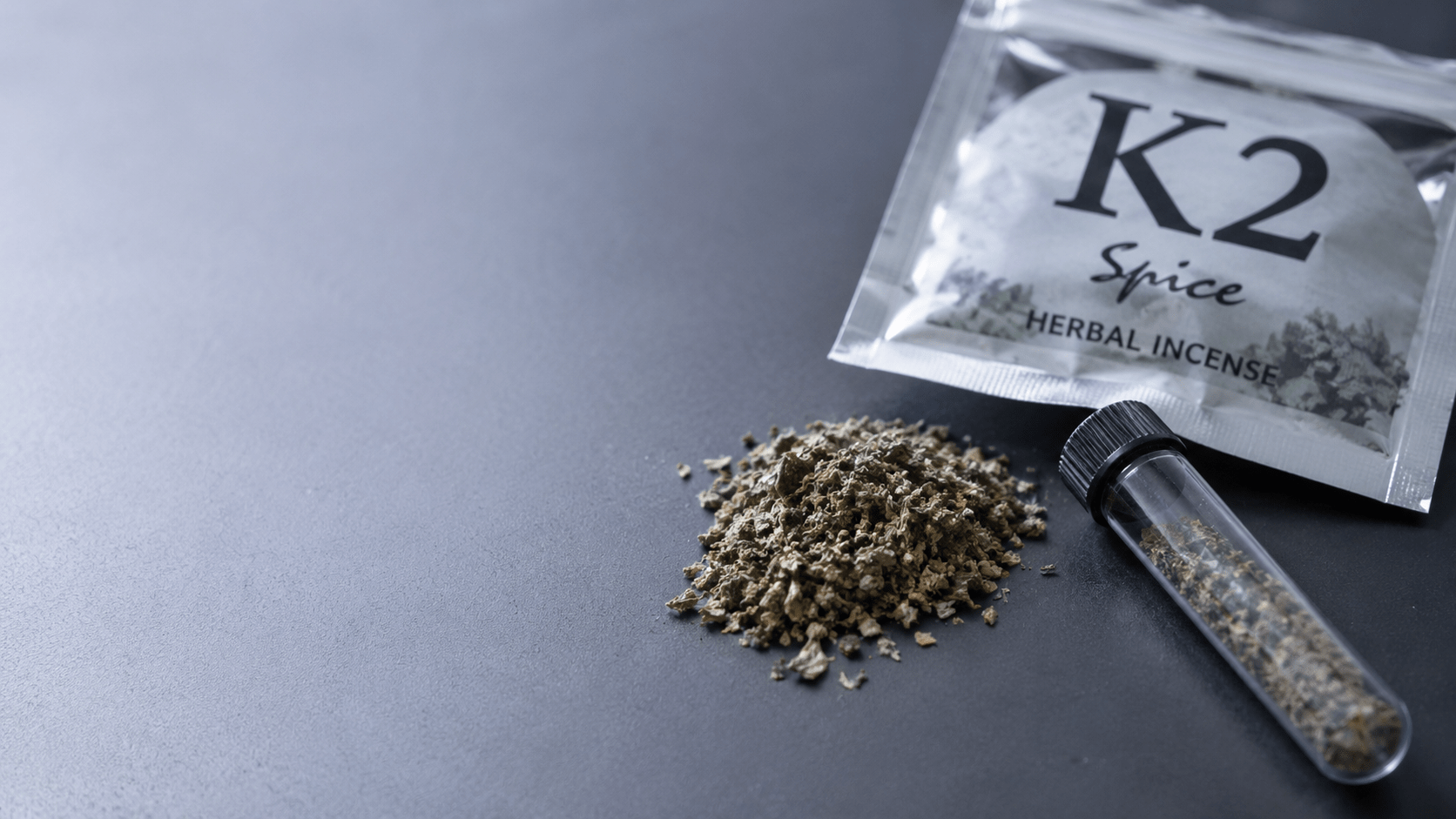
- Dried herb/plant material: The most traditional form. Plant matter (which can be anything from damiana to marshmallow leaves) is sprayed with synthetic cannabinoid solution and sold in small foil packets. It looks similar to dried cannabis flower but smells and burns differently.
- Liquid form: Increasingly common, used in vape pens and e-cigarettes. This is particularly dangerous because it’s very easy to accidentally consume an extremely high dose.
- Powder: Less common, but used for mixing into homemade solutions or sometimes eaten.
- Tablets or capsules: Seen in some markets, though less frequently.
The packaging is often colorful and eye-catching, featuring cartoon imagery or nature themes. Packets are typically small (around 1 to 3 grams) and sealed in shiny foil. Many list vague botanical ingredients to appear legitimate.
Why K2 Is Often Misleadingly Marketed as Herbal
The “herbal” label on K2 packaging is one of the most effective and dangerous marketing tricks in the world of synthetic drugs. Walk through what actually makes something “herbal” — it means the product contains plant-derived substances, typically used in traditional or folk medicine. By that definition, K2 is not herbal. The psychoactive effects come entirely from synthesized chemical compounds, not from any plant.
So why does the packaging say “herbal incense” or “natural herbs”? A few reasons:
- Legal loopholes: Calling it “incense” or “herbal blend” and stamping “not for human consumption” on the label was an early strategy to avoid FDA regulation and controlled substance laws. If it’s marketed as incense, it technically doesn’t need to meet food or drug safety standards.
- Plant filler material: The product does contain real plant material — it’s just that the plant itself does nothing psychoactive. The leaves are essentially a carrier for the synthetic chemical. Calling it “herbal” because it has dried leaves inside is deeply misleading.
- Consumer trust: The word “herbal” carries a perception of safety and naturalness. Many people associate herbal products with health stores, natural remedies, and low risk. Manufacturers absolutely exploit this association.
- Regulatory evasion: For years, these products slipped through legal cracks by constantly changing their chemical formula. The moment one compound got banned, manufacturers would slightly alter the molecule and re-release the product under the same brand name, still marketed as “herbal.”
The result is that someone buying a packet labeled “herbal relaxation blend” may genuinely believe they’re getting something closer to chamomile tea than a potent, unpredictable synthetic drug with no safety testing for human use. That gap between perception and reality is exactly what makes K2 so dangerous.